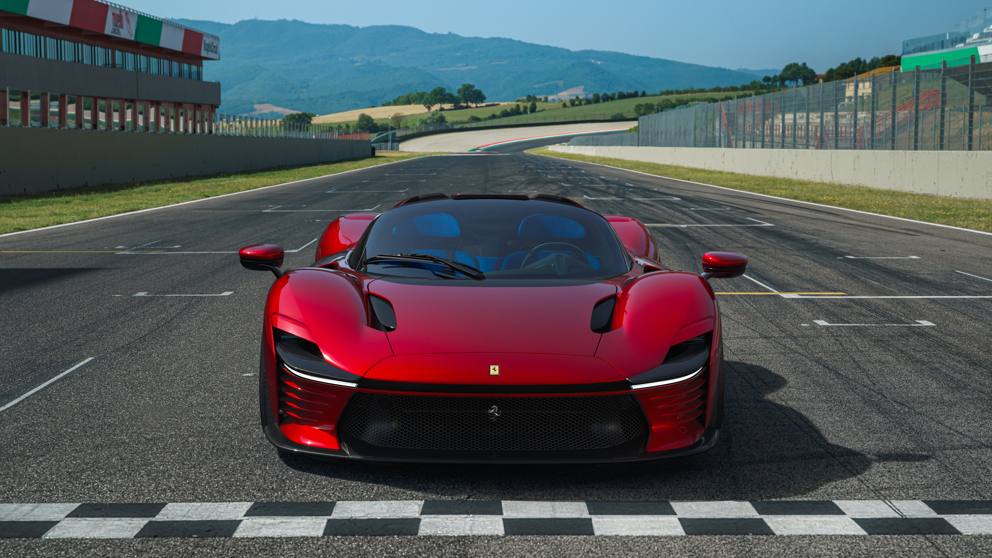
- Ferrari is yet again one of the strongest brands in the world, representing the excellence of Italian engineering.
- Not even COVID-19 was able to stop them thanks to accurate marketing strategy and their unique ‘Ferrari experience’.
- Diversification and R&S is leading Ferrari towards a bright red future.
Ferrari is one of the most famous and renowned brands when it comes to luxury cars, in Italy (of course, it was founded in Maranello) but also in the world. Its on-point strategy, as well as its flexibility, can give us a lot of useful tips on how to sell billion of dollars worth of cars in every part of the globe. And even if that is not your life goal, well neither is mine. But guess what? If you are an expert on cars but have no sales skills, you are not going to make a single dollar; instead, you could know close to nothing about cars and still become a millionaire selling them if you know how to. So let’s start, shall we? The first key point I would like to focus on is the structure of the competitive advantage. Ferrari differentiates from other car companies and focuses on the luxury car niche. The differentiation is based on the brand strength, a symbol of Italian excellence in quality and design, whose message is communicated via specific marketing. In particular, we’re talking about no advertising, no tv commercials, no online pop-ups: in fact, Ferrari participates in the biggest automotive fairs, like Frankfurt or Geneve, but nothing relevant elsewhere. Now, of course, it’s not the only brand that adopts this marketing strategy, let’s just think about Lamborghini or Zara. About this, there’s a famous interview by Lamborghini’s founder Ferruccio Lamborghini (the link is at the bottom).
Ferrari’s marketing is all about naming and brand positioning, and it’s very effective: in 2019 Ferrari was the number 1 Italian brand by influence in the world. To reach those types of goals the company looks forward to its product placement within the sector and customer segmentation. This translates in the real world to have a high income, being attentive to details and quality of the product client-prototype. Therefore, obviously, customer service is essential. Buying a Ferrari is an experience itself: insiders usually refer to this as the ‘Ferrari experience’ because many times, before the act of purchase, you get to visit Ferrari museums and the factory in Maranello, take a test drive at the Fiorano Circuit, eat at the ‘Cavallino’ restaurant and so on. Still, the core business is the production phase. Its success is given by constant investments in research & development. Attention to new technology and market trends (for example, hybrid and electric cars) as well as attention to corporate governance are just a few pieces of the whole picture. To sum up, Ferrari combines luxury and brand with excellent technical performances and unique design.
The other key point is the diversification strategy. Ferrari operates now in at least 3 sectors outside its core business. The first one is, of course, motorsports. And this is not a surprise: the company was born as a manufacturer of f1 cars. Still, ‘Scuderia Ferrari’ is the only team to have taken part in every single F1 world championship since 1950 and the first team when it comes to grand prix wins. Its iconic red livery in which Michael Schumacher and Gilles Villeneuve scorched down the circuit is a vivid memory in every F1 fan’s mind. Ferrari is involved also with GT competitions and has its own Driver Academy and Simulation Centers. The second sector is retailing. Over the last years, Ferrari invested a lot in the opening of Ferrari stores and outlets all around the world, from Italy to Los Angeles, Miami and Macao. In this field, the purpose is not just to sell standard merchandising (shirts and hats), but instead to collaborate with famous fashion brands and create Ferrari’s own line of watches, glasses and many more. For example MontBlanc, Hublot and Ray-Ban. And thirdly, entertainment. This sector is the one that contains basically everything which isn’t retailing or motorsports. Ferrari has two museums in Maranello and Modena that combined with ‘Il Cavallino’ restaurants are a good part of the whole ‘Ferrari experience’: but it’s not just this. In 2010 the Ferrari World at Abu Dhabi was opened, one of the biggest indoor theme parks in the world (part of the Yas Marina project in collaboration with Abu Dhabi city to a cost of approximately 40 billion $). In 2017 in was opened the Ferrari Land in Spain -once again- was built on a huge surface of more than 70.000 square meters. Of course, a lot of initiatives and projects are still running now.
So, what can we learn from this? Well, we should agree on the fact that Ferrari is about passion, tradition, brand and quality. These values reflect every aspect of the strategy: not only the strategy proposed in this article but also internal and external growth, collaboration policies, internationalization strategy and so on. This underlying aspect (coherency) gives the company identity, solid foundations and an environment in which every stakeholder agrees with each other. It’s the basis of sustainability.
RESOURCES
- Ferruccio Lamborghini interview: (24/1/22) https://youtu.be/_zv7A-fIr9c
- Marketing (28/11/21) https://businessweekly.it/notizie/ferrari-in-pole-position-anche-nel-marketing/



 The Bear Street Journal.
Leave a comment