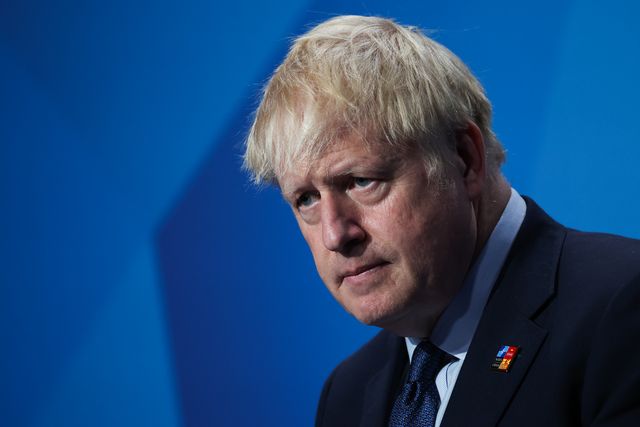
- After an amazing 2021 Boris parabola sank after scandals regarding his government
- Many claim scandals have dirtied definitively his reputation and that’s the only cause behind his failure
- However, internal division and changing viewpoints had a significant impact on his resignation
It’s May 2021. Imagine you are a Briton watching TV news after the local elections, in which a party gains hundreds of new seats in councils. You fall into a year-long coma and then you wake up. Would you be astonished if you discover the same PM who smashed other Parties has now resigned? That’s not fantasy, that’s what happened to Boris Johnson, British Prime Minister: after spending 3 years in office, he declared he is set to leave his office in Autumn, as Conservative Party will choose his new leader.
Popular national tabloids suggested his resignation was forced by shocking events which ruined the image of the Party and of the PM. First of all, the former London Mayor was spotted partying in his official residence with other officials during the 2020 lockdown, when all citizens weren’t allowed to circulate freely (that scandal was referred to as “partygate”). For a few weeks, the Member of Parliament Chris Pincher is accused to be alleged sexual assault. The PM declared to not be aware of the event, but many think he knew and covered it all up.

For sure, integrity and dignity are lost after these appalling scandals, however, the problems must be found much deeper. The government faced an imponent crisis, characterized by a rise in living costs, especially fuels and housing bills: costs of property and rented houses went crazy in a country which averages the smallest houses in Europe, while the housing tax revenues are enlarging collectors’ pockets (+25% from 2020 to 2021). The actual struggle is a violent heat for Britons, who survived Brexit’s side effects, by finding new trade horizons, while they maintained a certain tie with the EU, despite the discussion for the Irish border status still goes on, as after Brexit it is meant to be outside Schengen area and to lose all facilities that status granted.
Brexit was one of Boris’ axes and a point all Cons generally agreed with (or at least accepted): however, the Party is no more united as there’s a clear split between two different wings of British Conservativism. The first is the classical Tory, inherited from the Margaret Thatcher era, based on neoliberal policies and ideological approach; the other is “One Nation”, a movement which focuses also on the welfare state and working classes. Boris Johnson tried to sum up both positions, but it was quite impossible, as they propose two irreconcilable ideas of state, economical purpose and philosophical attitude in general. It resulted in both sides criticised government measures against price growth: the former condemned the state intervention in the economy as dangerous, while the latter claimed the executive power hasn’t done enough to help citizens. Moreover, new figures are appearing in the Party, who will fight to gain the leadership in September: some ministers such as Liz Truss (Foreign Affairs), Nadhim Zahawi (Finances) and Rishi Sunak (precursor of Zahawi) can take control, and all offering different proposals to reinvigorate the Party. The most interesting fact is that many candidates have foreign origins, such as Pakistan, India, Iraq or Nigeria, showing how the Party which once sustained British colonialism and hegemony is now embraced by non-ethnical English people, often descendants of colonial subjects.
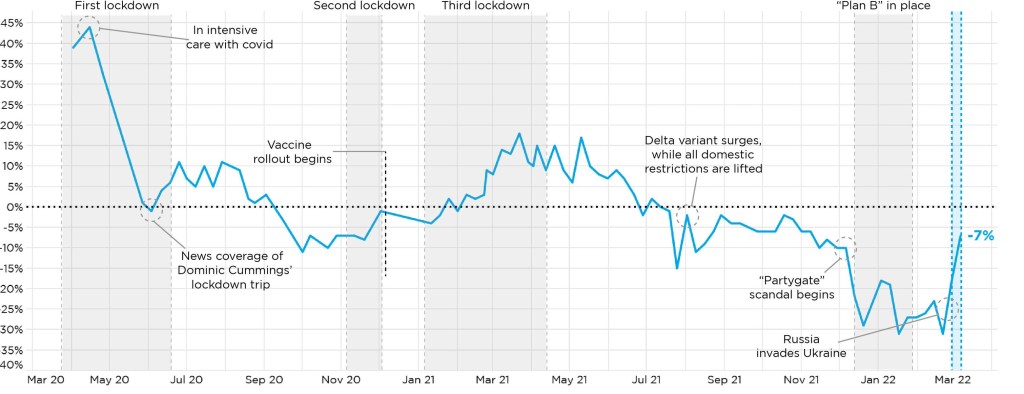
The changing dynamics of Tories reflect the changing attitudes of Johnson. We couldn’t believe it, but Brits have always known a totally different Boris. They were familiar with an anti-establishment man, a man who hanged on a zip wire with Union Flags on the occasion of the London Olympic Games, a man who offered tea to journalists as a “humanitarian service” as he had nothing to say about his own declarations about Muslim women wearing burqa (he stated they were “like post boxes”), the one who tackled opponents in charity football matches in a purely English style. Now, he behaves as the most authorable leader in Western Europe and he demonstrated it during the Ukrainian crisis: the British government was immovable in backing Kyiv and challenging Russia, but other changing communicative attitudes are not admired as his diplomatic ones. Rainbow-washing, references to toxic masculinity and other Progressive patterns are elements that can attract new voters, but push away many others. As result, many social Conservatives and historical supporters have refused this new rhetoric and trust no more the PM.
In conclusion, scandals have undermined strongly BoJo’s reputation, but we can’t deny how chamaleontism and arguable approaches can waste historical relationships and fanbases, even though you are drawing the line for the entire Western world in common foreign policies.
Front Page Photo taken from Nurphoto/Getty Images.



 The Bear Street Journal.
Leave a comment