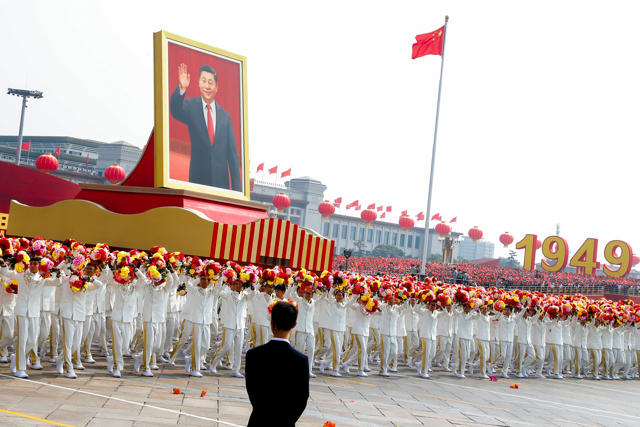
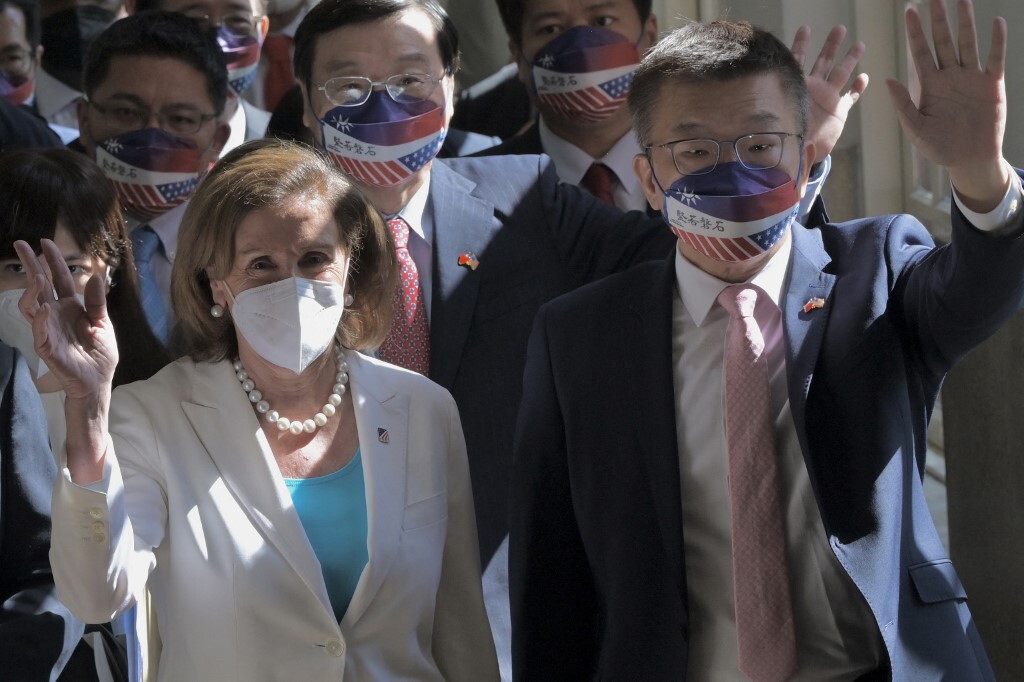
- Taiwan was menaced by Chinese Forces, as US Congress Speaker Nancy Pelosi landed on the island.
- Many neighbors are denouncing threats, both diplomatic and military.
- The rudeness used in international affairs is applied even wider in domestic issues.
For many hours, between 2nd and 3rd August, the world watched worriedly the flight which took Mrs. Pelosi from Kuala Lumpur to Taipei. The notorious website Flightradar24 received so many clicks that it crashed for several minutes as it couldn’t bear so many visits simultaneously. Luckily, the Speaker landed safely on Formosa Island, even if the Chinese army showed itself up: Taiwan Airforce stated that several People’s Liberation Army jet fighters violated Taipei’s exclusive airspace, and Nancy Pelosi was also later sanctioned by the Chinese Communist Party, extending the list of forbidden US personalities forbidden in the dragoon country.
Western public opinion finally experienced an atmosphere that nowadays praxis in the Far East. Since 1949, CCP-ruled China have started an aggressive foreign policy toward Taiwan, guilty to be a rebel province, as the Nationalist Party Kuomintang escaped the mainland after the Civil War loss and created the Republic of China (the official name of Taiwan, not to be confused with the Popular Republic of China, the continental state) on the island, a capitalist and filo-western state. After the USA and their allies agreed on the so-called “One China policy” (the recognition of Communist China alone, with the suspension of formal ties with Taiwan), the Beijing regime seemed to accept Taiwan’s existence, in exchange for international recognition. However, Xi Jinping never accepted the status quo, so he planned to invade Taipei, regardless of the economic and human costs. Most think it’s not a matter of if, but a matter of when. Many regional powers like Japan, South Korea, and Australia asked China to stop military moves in the area.
Taiwan may have the same destiny as another Asian Tiger, Hong Kong. That’s 25 years since the Brits lost control of the city, in 1997, as it returned under China’s jurisdiction, but maintaining a certain autonomy in many decisional processes (“One China, two systems policy). The majestic skyline and the expansion of financial activities suggest the city is still experiencing the 80s-90s economic boom. However, not all that glitter is gold, Hong Kong shining skyscrapers too. The former British colony is living under a huge terror climate, in which the local Administration is strictly controlled by Beijing officials. On 12th June 2019, almost 2 million Hong-Kongers protested in the street, against the Extradition Bill, in which the Administration could bring back “escapees” (a misleading word to describe pro-democracy and anti-China demonstrators) from countries that hadn’t any kind of extradition agreement with HK. Hundreds of protesters were victims of police brutality, who committed violent crimes also on inoffensive people. The Chinese central government responded in 2020 with a law on national security allowing the HK local government to overwatch organizations, newspapers, and single individuals also on social media, to prevent any kind of secession, subversion, or convicted foreign links. That law violated the Johannesburg Principles on free speech and infringed the concept of two systems and juridical autonomy of Hong Kong. If the “second system” doesn’t allow you to speak freely, so imagine how the first main system could be.

CCTV camera image probably depicting Uyghur Muslims in a re-education camp (photo by Corriere Della Sera)
Nowadays, the actual Chinese mainland system is probably the closest example of an Orwellian dystopia in whole human history, a cruel cocktail of exaggerated nationalism, the collectivist idea of state oppressive control, and new sophisticated AI use, the perfect elements which create the perfect dictatorship. The first element, the nationalist identarian one, relies on the racial supremacy of Han ethnicity and the celebration of Confucian and syncretic traditions, and the consequent refusal of all minorities. While I’m writing, millions of Uyghur Muslims are detained in Xinjiang regional concentration camps. Anyone who is detected reading the Quran, not shaving his beard, refusing to eat pork or drink alcohol could be arrested with the charge of being an Islamic terrorist. Here, people are forced to abandon their language, traditions, and beliefs. Some escapees talked about the inhuman condition of life in these centers, while many denounce, we’re in front of an authentic genocide. Other minorities who are equally persecuted are Tibetans and Mongolians, while also official Catholic worship is prohibited.
The idea of an empowered central state has always been accepted by Asian cultures like Montesquieu stated in “The Spirit of Law”. However, many Asian countries have now democratic assets; that’s the case of Japan, South Korea, and Taiwan but also other countries are improving. PR China, like North Korea, Vietnam, and Laos, is still one of the few self-claimed “socialist” states in the world. After a bloody war in 1949, Mao’s communists defeated Kuomintang nationalists, who escaped to Taiwan and the Chinese Communist Party became the only admitted political organization. Mao Zedong proposed a new form of socialism based on agriculture and land reform and he sustained the so-called “4 pests’ campaign”, a project to eliminate some animal species accused to waste the harvest, which was part of Lysenkoism agenda, a non-official set of theories which refused genetics and Darwinism, believed to be bourgeois and fascist constructs. Tens of millions died because other pests became the prey of none, so they prospered without limits. Other millions died in consequence of the cultural revolution (the repression of all political and ideological minorities, and many members of the same CCP were eliminated), the one-child policy (women became victims of forced abortions, to control birth and population growth), and of many natural disasters (Banqiao dam accident). During Deng Xiaoping’s office, China gets better economic freedom, even if in 1989 Tiananmen Square protests were repressed by the PLA. According to many, China shifted to a capitalist system, as now it deals with western powers. However, quite all great entrepreneurs are tied and controlled by the CCP, who it’s still the first dealing actor in foreign business, so it’s a sort of state-run economy with few friend figures, as it was in the Soviet Union. Many compare actual China with 19th-century European early capitalism in terms of worker conditions, but the worker exploitation is very similar to soviet Stakhanovism (exhausting labor philosophy).
At this point, anyone with a minimum of knowledge of international affairs would claim that nationalist, collectivist and totalitarian states have always existed. That’s undoubtedly true, but the Chinese government holds a strategical weapon: new digital technology. China has 1,4 billion inhabitants, but in the coming years, all these people will be recognizable by the government thanks to the Social Credit System. According to Chinese officials, it’s a voluntary campaign purposed by private firms “to prize good behaviors and punish the bad ones”. Most are convinced (and that’s pretty justified) that these companies are covered government organs that could so have the power to censor individuals and groups (which are sanctioned if they don’t take part) and after several “unmoral” behaviors they could finish on a “black list”, losing the possibility to go abroad or to get a mortgage. This theory is not science-fiction, as in China almost 200 million CCTV are on and there’s a universal facial ID recognition system, which is already used in the supervision of the Uyghur minority. Policemen and soldiers are replaced by new sophisticated AI forms, such as robotic dogs which emailed slogans or warnings during the Covid-19.
In wake of these developments in China, many are afraid that new AI improvements could become an instrument of government in the West to transform our democratic societies into surveyed authoritarian systems, similar to the Chinese one. We don’t know if this perspective will be confirmed. Our future might be in danger if we look deeply into the relationships in both diplomatic and economic fields we have with PRC, but we will investigate it in a second part…
Sources:
https://www.reuters.com/article/us-asia-apec-china-taiwan-idUSBRE99503Q20131006
https://edition.cnn.com/2019/07/01/asia/hong-kong-protests-divide-intl-hnk/index.html
https://dizionaripiu.zanichelli.it/storiadigitale/p/voce/2085/dispotismo-orientale
https://www.economist.com/leaders/2022/05/26/how-xi-jinping-is-damaging-chinas-economy
https://www.telegraph.co.uk/news/2018/03/24/chinas-social-credit-system-bans-millions-travelling/
Front page photo taken by Getty Images


 The Bear Street Journal.
Leave a comment