
- The “generations” of subsidies models is a neologism to differentiate the ways that company engage new potential customers.
- While each of them has both pros and cons, the last type is the most promising.
- In this article, we will analyse blockchain-based subsidies and study what are the basic functions of utility tokens.
If Uber Eats was an interesting case study of the different types of network effects in action and combined, it is time to shift our focus to the central topic of the whole series: third generation subsides. This expression is a neologism that identifies all the applications of blockchain to the world of marketing and promotion. In fact, as a quick recap, maybe it is useful to describe the previous types of subsides.
First of all, the word ‘subside’ is being used to identify the mean that companies and organizations use to incentivise the use of new products. Hence, the first generation of subsidies didn’t involve the use of the Internet, so it was limited to local areas: for example paper coupons, supermarket discounts, inaugurations or tasting samples. They are still used now, but, of course, they have a lot of disadvantages. At first, the reach of a typical campaign is very limited. Additionally, it may be good for retaining customers, but not the best option to get new ones (or, at least, to get several new users that justify the cost of the campaign). The reasons are that:
- Requires the physical presence of an individual (in most cases).
- Socially, potential customers became increasingly reluctant to new products as the years passed.
- Because of the limited reach, the campaigns may collect samples of data that can be misleading in all sorts of ways.
Not only, but let’s not forget that physically managing data is not efficient nor safe: for example, let’s think of potentially fraudulent use of supermarket coupon codes or opportunistic behaviour towards inaugurations.
The second generation of subsidies involved, in different ways, the internet. The pre-requirement was that physical stores need an online presence, and then they would create specific campaigns. Because of this, the first and second types are not just an evolution of one another, but also complementary in the way they can be used. Nowadays, most online services invest in internet campaigns such as bonuses or “first free subscriptions”: through those, they can use data to personalize their subsidy offerings to individual consumers, and they can leverage social media and other digital channels to reach customers with targeted offers. Overall, second-generation subsidies grant a huge potential reach and high customization of the offers, combined with a limited risk of misleading information and fewer fraudulent opportunities. On the other hand, there are several reasons why they are not perfect:
- Cost: offering subsidies can be costly for companies, particularly if they are providing significant discounts or financing options. This can eat into profit margins and make it difficult to maintain sustainable growth.
- Effectiveness: customers who rely too much on discounts may not be willing to pay for full service, hence not potential clients cut down margins.
- Competition: because of the ease of creating internet campaigns, competitors can offer similar advantages and undercut prices, especially for cost-based business models. The technology is accessible to anyone and the methodology date back to the beginning of the 2000s.
- Privacy: the offer of internet-based subsidies implies that the vast amount of data collected from users is safely organized and protected, otherwise there could be issues with authorities that can potentially destroy the brand’s reputation.
Therefore, third-generation subsidies come to help. Better known as blockchain-based subsidies, they involve the use of the latest blockchain infrastructure to provide users with a utility token, registered on an existing blockchain. Those types of tokens, not to be confused with “security tokens”, serve a specific utility, like redeeming a special service or receiving preferential treatment for services. In theory, they are efficient in the measure they are limited when issued and so their value does not relate to the current valuation of a company. In fact, unlike traditional cryptocurrencies like Bitcoin or Ethereum, they are not intended to be a medium of exchange but rather to have a use within their respective smart control protocol.
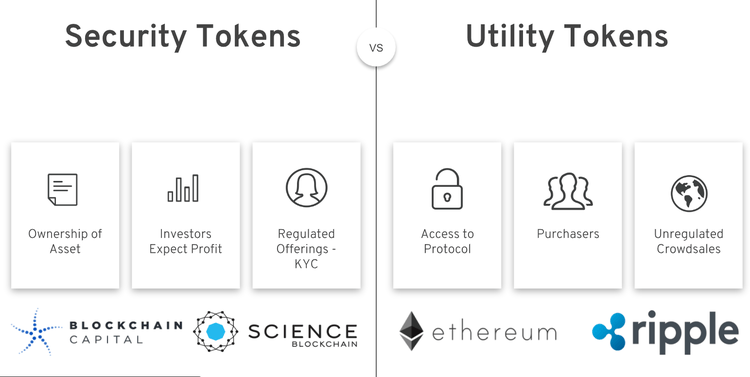
The main roles of utility tokens (UTs) include giving their owner the right to utilize or own a product and the right to pitch or vote for cases or topics. For example, the token FIL gives the users of the blockchain Filecoin access to decentralized storage. To this extent, these tokens provide the exchange value for the services they give. Additionally, UTs can be used to improve customer experience by giving rewards or first-time bonuses or maybe allowing access to an additional “club-style” service or part of the blockchain infrastructure. Of course, their optimal use for our marketing purposes is obtained when UTs are for personal use only, so not tradeable nor shareable.
Traditionally, UTs have been associated with ICOs (Initial Coin Offerings) because they included an element of governance: briefly, the owner not only would have access to a service but also would get the right to vote regarding the vital decisions of the whole blockchain. Post-2017, regulating institutions intervened to manage the fraudulent uses of these systems, for example by clearly stating the difference between utility tokens and security tokens (the legal aspects will be further examined in the upcoming article). For now, it is enough to understand that the UT we will implement is the equivalent of a paper discount code but developed on a blockchain.
To be fair is not the same. UTs overcome a lot of problems of the prior generations of subsidy models. To sum up the most relevant ones:
- Increased transparency, accountability, and efficiency: because of blockchain technology, all coupons are publicly visible to every node and not removable from the chain. The node could be both a potential new user as well as an organization or the issuer company.
- Less fraud and corruption (on the users’ side): for the same reasons listed above, except for finding a way to be transparent also on the company side. An easy solution could be a clear and detailed campaign paper that entitles the company to full control of the subsidies.
- Less administrative costs: the savings from not requiring either a physical presence or an online advertising campaign, extendable also to the reduction of the need for potentially expensive intermediaries.
- Scalable: once the blockchain and the smart contracts are effective, the same technology can be used also for financing purposes (like a debt title denominated in native token), as a native payment system or for other types of marketing (for example, long-term engagement campaigns)
- Cheaper: upon just an initial investment in technology (which as of now is not that cheap), the company can get the massive advantage of reducing the cost of the promotional campaign by a lot.

On top of those, providing access to a new service through platform-specific cryptographic tokens offers the platform new possibilities in terms of its entry and pricing strategy, which can be more attractive than available alternatives. Because of the low costs, it can also become a way to test the market for new products, all within the same ecosystem.
Just to clarify, this article (as the whole series of articles) isn’t meant to research completely new types of ways a company can engage new potential customers and develop their network effects (whatever form or industry they are in). Instead, here, the purpose is to evaluate the pros and cons of every type of marketing subsidy. In doing so, we highlighted the advances that second-generation subsidies made on top of the first one, and then why utility tokens are worth considering. Stay alert for the next article, in which we will analyse the way to implement a blockchain-based subsidy model, starting from the potential technical and practical risks.
REFERENCES:
https://worldcoin.org/articles/what-is-a-utility-token
https://ihodl.com/analytics/2018-10-03/what-are-utility-security-tokens/
“Overcoming the Coordination Problem in New Marketplaces via Cryptographic Tokens” by Yannis Bakos and Hanna Halaburda, Information Systems Research (forthcoming), Special Issue: Market Design and Analytics, New York University (USA), February 2022
Cover Image courtesy of Pexels




 The Bear Street Journal.
Leave a comment