
- Going from theory to reality requires attention to a lot of critical factors, such as technology issues or strategic risks.
- Utility tokens require in addition also technical ability and general knowledge about how blockchain works.
- As for the applications of UTs, there are a lot, but mainly within the crypto ecosystem. Why is that?
After explaining why blockchain-based a.k.a. ‘third generation’ subsidies models can impact companies in encouraging network effects, there are still a lot of factors that need to be taken into consideration. As a reminder, in the last article, we talked about utility tokens, which are probably the easiest and most immediate mean of integration of the blockchain technology to the overall structure of a company. Specifically diving into the marketing area, UTs offer a wide range of advantages if compared with internet campaigns (second generation) and ‘traditional’ paper coupons (first generation). For example, the increased efficiency and transparency provided by the blockchain’s nodes, or the significant cost reduction in intermediation. On the other hand, this late technology has several disadvantages, mostly due to the disruptive emersion of UTs since the mid-2010s.
Now, let’s say that we are happy with the pros and we are looking forward to creating a blockchain-based campaign. Hence, our goal is to create an object that has all the previously mentioned advantages, while ultimately targeting first potential customers, making them the early advocates for the brand and, in doing so, initiating a beneficial network effect for future wannabe users. Also, the impact of a change in subsidies model should be cost-effective, otherwise, why bother? Perfect, for this reason, it is essential to acknowledge:
- Technology risks: these include a wide range of potential issues, from the cost of using UTs, the choice of the platform, the lack of decentralization of relying on other blockchains and various forms of cyber risks.
- Strategic risks: for example, the necessity to educate users about new technology, provide information, and evaluate users’ probability of joining.
- Implementation risks: mainly regarding regulation (both in the EU and in the world), but also the requirement of specific personnel
As for technology risks, it can be helpful to better explain how UTs work. Technically, a utility token works by using smart contract technology on a blockchain network, for example Ethereum. When a user purchases a utility token, the transaction is recorded on the blockchain, and the token is stored in their digital wallet. To access the service or product, the user must have the required amount of the utility token in their wallet. If so, the smart contract on the blockchain network will then automatically execute the transaction (through validation), register it and grant access to the service. In the Ethereum ecosystem, there is a cost of execution of the contract which is called gas. These are the fees that are used to pay validators for the resources needed to conduct transactions. The exact price of the gas is determined by ETH’s supply and demand and network capacity at the time of the transaction.
To give an estimate based on last year’s data, the gas price fluctuated between 15 and 50 gwei (10-9 ETH), while ETH ranged in price from USD 1200 to USD 3000. So, gas fees ranged from USD 0.000018 (15 gwei*1200) to USD 0.00015. Of course, this excluded peak moments, like when gas reached over 213.7 gwei on May 12th, 2022. Even at that time, the gas fee was still around USD 0.000417. Now, a normal transaction sending ETH or a token normally costs 21,000 gas, whereas an ERC-20 token approval requires 45,000. Approximating 65,000 gwei in total, it means that over the last year transactions involving ERC-20 tokens ranged from about 1.17 to 9.75 USD. But, using Layer 2 chains compatible with ETH, like Arbitrum or Optimism, prices for gas can drop to 0.1 gwei, resulting in a cost range per ERC-20 transaction between 0.0078-0.0195 USD. In fact, using a Layer 2 chain could be a solution to moderate fees: they achieve so by moving the transaction information off-chain and then moving the results back onto the Ethereum network. In the overall process, the potential lack of decentralization does not offset the cost reduction. (please, check the ‘methodology’ section at the end of the article).

To engineer a UT, the most popular smart contract is the ERC-20, which is a standard for fungible tokens. It was proposed by developer Fabin Vogelstellar in 2015 and then implemented in 2017 after its proposal got approved by the community. Specifically, ERC-20 is a list of functions (also known as ‘methods’) that act as instructions for the tokens and include total supply, account balances and all the possible actions. Another popular standard for tokens is BEP-2, which runs on the Binance Chain, owned by the cryptocurrency exchange Binance. Overall, the issue of choosing the standard is very much geeky, so for our purpose we will prefer ERC-20 over BEP-2 because of the larger number of projects already running and for the decentralization that Ethereum provides. Of course, the thought of creating a new blockchain as well as an additional standard is not cost-effective. Furthermore, creating an ERC-20 UT on Ethereum doesn’t require too much ability and is also quite safe, considering the size of the blockchain.
As for strategic risks, it all depends on the type of marketing campaign. Some uses of UTs include payment systems, reward models or access to additional services, but there are countless. Here are a few:
- Binance Coin (BNB) is a token that can be used within the vast Binance ecosystem, giving its users discounts on trading fees, access to exclusive ICOs and a payment method.
- In 2019, Singaporean crypto startup PAL network launched a series of microinsurance products that can be bought using PAL tokens, which included RidePAL, Flight Delay and Flight Cancellation. The peculiarity was the integration with a token that would unlock discounts.
- Reddit recently launched Reddit Coins within its platform. The tokens are used to reward users who make high-quality submissions to the platform. In this way, coins can be used to encourage the generation of more content around a product or a service. The interesting fact is that they are not connected to any blockchain.
- San Francisco-based web browser Brave drives its revenue around the Basic Attention Token (BAT), which is sent to the websites that users visit in a proportional amount to the time spent on it. In addition, the Brave Rewards program pays BAT the users to view ads, in the measure of 70% of the ad revenue that Brave gets from the advertisers.

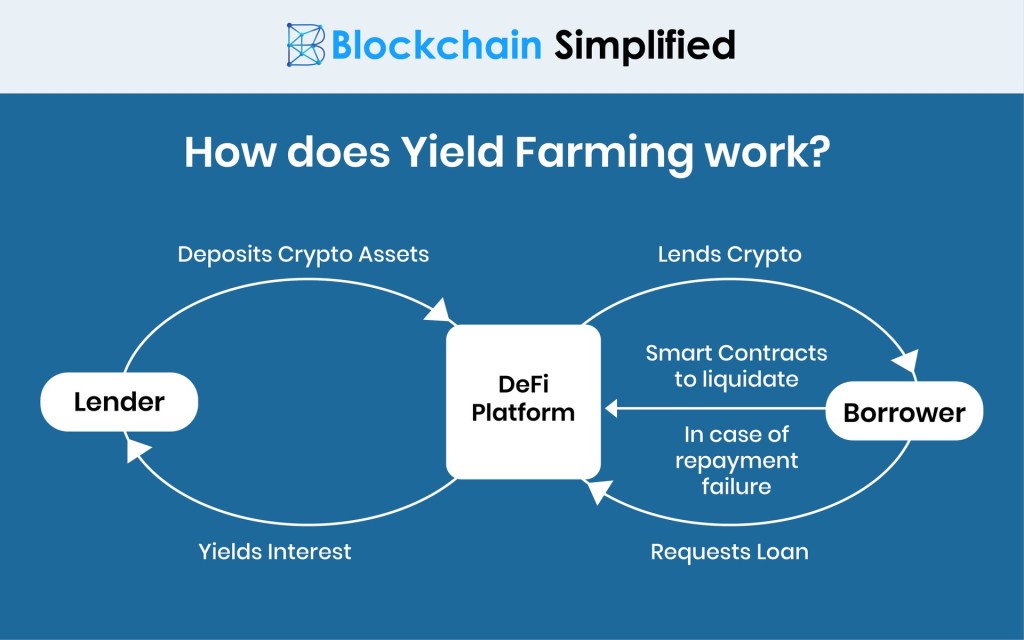
Now, keep in mind that the most common use cases for tokens are still within the crypto ecosystems. This explains why the most popular use is as a means of payment, which is exactly why this technology was invented in the first place. Later, the use cases extended to running the blockchain, for example as a reward for transaction validators (staking) or for supporting DEXs (decentralized exchanges) with fiat liquidity (farming). Innovative uses of UTs include funding, like ICOs and blockchain-backed bonds. But, for the vast majority of non-blockchain companies, integrating UTs in their business models is still limited to an additional payment system or simple bonuses. Also, since the integration costs are noticeable, a lot of projects failed because of a lack of user engagement. An example is the joint project between IBM and Maersk to create TradeLens, which goal was to facilitate transactions between shipping and freight operators. It started in 2018 and was dismissed at the beginning of 2023.
In this article, we explained the most technical aspects to consider while implementing a third-generation subsidies model for a general company. Willingly, it is possible to further research, but for now, we know a little more than the essentials. In the next article, which will be the last on this topic, we will discuss other critical aspects to consider in the implementation phase, like connecting customers to technology and legal aspects.
Methodology:
- ETH price range was estimated around data between April 17th, 2022 and April 17th 2023. The actual price range was USD 896.11-3173.45 (source: Yahoo Finance) with a mean of USD 1599.25.
- Gas fees range (in gwei) was estimated on the same period (source: YCharts)
- The price for transactions using Layer-2 was based on April 17th, 2022 data (source: Cryptoneur)
SOURCES (last checked 17/4/23)
Investopedia:
- https://www.investopedia.com/news/what-erc20-and-what-does-it-mean-ethereum/
- https://www.investopedia.com/terms/g/gas-ethereum.asp
Metamask:
- https://support.metamask.io/hc/en-us/articles/360059562111-How-to-estimate-the-gas-fee
- https://support.metamask.io/hc/en-us/articles/4404600179227-User-Guide-Gas
Data:
- Ycharts (https://ycharts.com/indicators/ethereum_average_gas_price)
- Nasdaq (https://www.nasdaq.com/market-activity/cryptocurrency/eth/historical)
- Yahoo Finance
- https://www.cryptoneur.xyz/en/gas-fees-calculator
- https://ethereumprice.org/gas/
Examples:
- https://u.today/pal-network-launches-microinsurance-products-making-travellers-happy
- https://www.makeuseof.com/get-use-reddit-coins/
- https://en.wikipedia.org/wiki/Brave_(web_browser)
- https://www.shipmag.it/blockchain-maersk-e-ibm-chiudono-la-piattaforma-tradelens-non-e-risultata-fattibile/
- https://www.maersk.com/news/articles/2022/11/29/maersk-and-ibm-to-discontinue-tradelens
Others:
- Medium (https://medium.com/pal-network/the-first-look-three-microinsurance-products-launched-by-pal-network-d6009fec0dc2)
- Tokenminds (https://tokenminds.co/blog/knowledge-base/how-to-integrate-a-utility-token-in-your-business/
- Fiscomania (https://fiscomania.com/utility-token-attivita-di-mining/)
- Sofi (https://www.sofi.com/learn/content/what-is-a-utility-token/)



 The Bear Street Journal.
Leave a comment