
Over the past articles, we analyzed separately all the elements we needed to compose a valid strategy involving blockchain and network effects. Now it is time to put everything together. The starting point of the idea is to effectively use tokens as the base of a subside-model to reach the first customers and then provoke a network effect that will allow the company to grow and develop its product in an exponential way, taking advantage of the pros of blockchain technology. To apply this idea to reality, we will suppose that Company A is interested in the idea and ready to implement it. As an example, here is some general info about Company A:
- Industry: Food & Beverage (primarily in Italy, also in Europe)
- Listed on Euronext Milan with a capitalization of EUR 15B
- Active for the last 30 years
- Strong marketing team
Therefore, Company A is a relatively big company, with a strong and established presence in European markets. The compatibility with the latest technological advances is medium to low, even though some of their key resources can result useful for the project implementation. If I were the project manager in charge of the operation, I would define a roadmap that can go as follows:

- Analysis: very straight forward, consisting of compatibility and goal setting, also including a cost-benefit analysis
- Initial planning: practical comparison between token options, market research
- Planning: definition of a tokenomics plan, a legal plan, a cyber security protocol, and a marketing plan
- Development: practical coding of smart contracts and the related infrastructure
- Launch: first beta version and further testing
- Engage: implement the marketing plan to reach the audience
- Optimize: long-term optimization of the infrastructure, new versions, potentially scale the model
Normally, a company like A is very likely to have the specific personnel required. To stick with the original roadmap, there will be necessary to have:
- Blockchain developers (in charge of implementation and coding)
- Tokenomics experts (someone with a combined informatic and financial background who will define the number of tokens, their value and so on)
- Web3 designer (user experience)
- Cyber security team (in charge of controlling the tokens and preventing criminal activities to happen to data)
- Legal team (that will define the guidelines in which operate)
- Marketing blockchain/communication expert (who will follow the engagement phase, gather insights, and promote the campaign)

Of those, we know that there is already a well-formed marketing team, and it’s very likely that company A has also a legal team and a cyber security division (probably divided into IT security and data security). Therefore, the most important team left is those of blockchain developers. To give a reference, it is an extremely new type of professional who typically has a programming background and then extended its interests to blockchain coding languages. According to Hired and CNBC, the average salary for blockchain developers is between USD $150,000 and $175,000 – a range that is approximately USD $15,000 to $40,000 higher than the standard salary for software engineers. That salary range puts blockchain developers on par with another in-demand group – engineers with expertise in artificial intelligence. Overall, they are quite unique, as the demand overcomes by five times the actual supply. In Italy, we can consider a salary of over EUR 60,000 for developers with 5+ years of experience. An option could be to involve external companies that provide blockchain consulting services, like IBM, Deloitte, PwC or Accenture.
Another very important figure would be the tokenomics expert, especially in the initial phases. Tokenomics experts are responsible for designing and implementing economic and monetary models for blockchain-based projects. These professionals develop strategies for token creation, distribution, and utilization, as well as the management of the overall project economy. They focus on understanding supply and demand dynamics, designing incentive and reward mechanisms, and evaluating the economic impact of decisions made within a tokenized ecosystem. The salary for a Senior Tokenomics Analyst is on average USD $74,000 per year, per CryptoJobsList. At the same time, a Web3 designer can become useful especially since its role is based on designing the user experience and user interface design of decentralized applications. Their skills are valuable, especially in easing the access barriers for “normal” people towards such advanced technology as blockchain. According to Web3career, the average yearly salary for a Web3 Designer is $100k per year, with a minimum base salary of $50k and a maximum of $216k. Those two professionals complete each other to cover all the main aspects of a blockchain project, with the tokenomics expert focusing on economic and monetary aspects and the Web3 designer focusing on the design and usability of applications and interfaces.
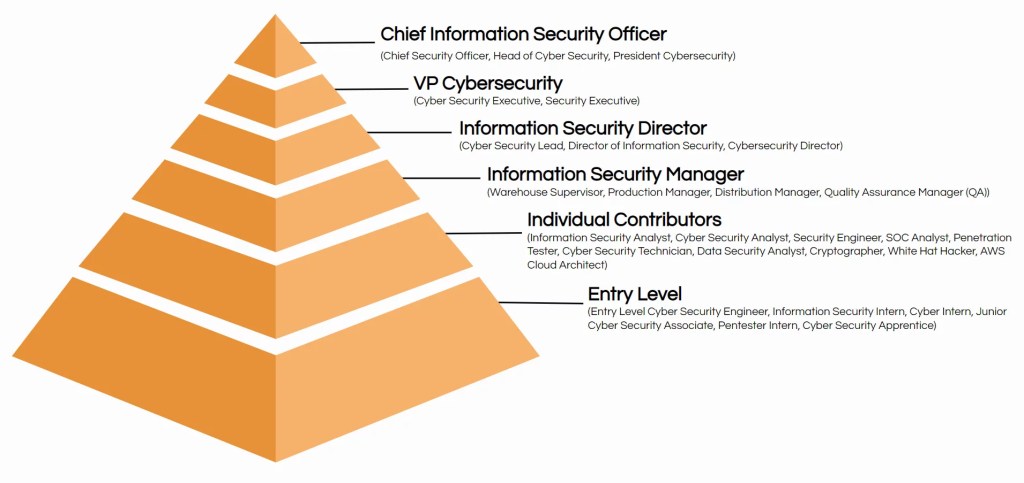
Lastly, we need to cover the cyber security aspects. As always, the more complex and advanced the technology gets, the most attention needs to be put on all levels of data storage and processing to ensure the privacy and security of the already not 100% confident customers. Situations are possible where the project that issued the utility tokens is disrupted, either because of errors in its ‘smart contracts’ or because of cyber-attacks against it. As the protocols that issue the utility tokens are based on the blockchain, the threats inherent in the blockchain, such as 51% of the validators and outside attacks, and other disruptions to its operation are also relevant. In a standard Italian company, this field is managed by two divisions, the IT office (who’s responsible is called CISO, as Chief Information Security Officer) and the data security office. The first one is responsible for creating the guidelines and protocols for the protection of vulnerable information in the systems, while the other is the operative side. Overall, they work together to develop and implement cyber security strategies, monitor systems, investigate incidents, and ensure compliance with relevant regulations. Since company A is a well-established company, they won’t have too many issues adapting their dedicated team to a blockchain project because, in the end, the type of data is very similar to what is already managed. Speaking about salaries, it is fair to acknowledge that the job market for cyber security professionals looks promising since the skills that these professionals possess are in high demand and are likely to continue to be so in the future: for these reasons, salaries tend to resemble the software engineers and the other technical figures previously described, perhaps slightly below given the less specificity.
If we were to increase the details of Company A, then we could target even better their necessities. To be fair, this is not a case study, instead, the example suited the intention of getting as close as possible to what would happen in a potential project. Coming very soon is the last, this time for real, article that will focus on the remaining aspects of the project and complete this very long research. Hopefully with a great ending.
External Sources:
https://cryptojobslist.com/salaries/senior-tokenomics-analyst-salary
https://web3.career/lead-tokenomics-designer-polygon/27683
https://www.investopedia.com/news/blockchain-job-market-booming/
Photos: Ongig; personal pwp presentation, Kardiachain (cover)




 The Bear Street Journal.
Leave a comment