- Mercado Pago is a leading Argentinian fintech company owned by Mercado Libre, offering a wide range of financial services, from digital payments to investments, across Latin America.
- Founded in 2003 in the aftermath of Argentina’s economic crisis, Mercado Pago has grown alongside shifting political and economic landscapes, each influencing its evolution and expansion.
- Navigating political turbulence—from currency controls to changing regulatory frameworks—has been crucial for Mercado Pago’s success, highlighting the company’s adaptability within Argentina’s complex financial environment.
After introducing the topic, we will now turn our attention to Mercado Pago, an Argentinian fintech company. More accurately, Mercado Pago is a financial institution with specific licenses to provide a range of financial services—from QR payments to investments. It is fully owned by Mercado Libre, the largest online e-commerce platform in Latin America, operating across 18 countries. Mercado Pago is available in 8 of those countries, including Argentina, Brazil, Mexico, and Colombia. Launched in 2003 as an extension of Mercado Libre, it initially aimed to offer customers a convenient online payment network. Today, it stands as the largest online payment network in Latin America.
As of May 2024, Mercado Libre is a publicly traded company (listed on NASDAQ under the ticker MELI) with a market cap of $85.61 billion, making it the 193rd most valuable company globally by market cap. If listed in Argentina, it would easily be the most valuable company on the S&P MERVAL Index, Argentina’s main stock market index.
These articles will not only describe Mercado Pago but also delve into its origins and growth trajectory. To understand this growth, I’ll explore the economic and political context in which Mercado Pago emerged: Argentina from 2003 onward. Let’s dive in, beginning with the key political and economic factors.
Since its early days, Mercado Pago has had to navigate a rapidly changing regulatory landscape in Argentina, adapting to government regulations and foreign exchange controls to survive and prosper. Mercado Pago, in fact, emerged in response to one of Argentina’s worst economic crises. The 2001-2002 crisis devastated the country, leaving behind a massively devalued currency, bank runs, social unrest, and a deep loss of investor confidence. In short, the collapse resulted from a combination of factors, including a fixed exchange rate regime and excessive debt levels.
The early 2000s, therefore, marked a period of recovery for Argentina. At the time, regulations primarily focused on traditional banking and financial services, with little oversight of fintech or digital payment platforms like Mercado Pago, which was still in its first stages. Over time, however, the regulatory landscape evolved significantly, with the Argentine government beginning to recognize the potential of fintech as a key driver of financial inclusion and economic growth. The Central Bank of Argentina (BCRA) became actively involved in regulating payment systems as they expanded. New rules covered areas like consumer protection—such as transparency in transactions, dispute resolution, and data privacy—along with Anti-Money Laundering (AML) and Know Your Customer (KYC) requirements. Digital payment platforms like Mercado Pago were required to verify user identities and monitor transactions.
On the political front, Argentina’s landscape since 2003 has presented both challenges and opportunities for Mercado Pago and the broader fintech sector. The pendulum swing between left-wing and center-right governments, each with distinct economic policies, created an environment of regulatory uncertainty and economic volatility. During the Kirchner era (2003-2015), the focus was on economic interventionism and social welfare programs. While these measures fostered financial inclusion and stimulated sector growth, they also resulted in high inflation and fiscal deficits, leading to an uncertain regulatory environment that challenged the stability of fintech operations.
Under the Macri government (2015-2019), priorities shifted toward reintegrating Argentina into the global economy, fostering growth, stability, and predictability for citizens and investors. Reducing inflation and promoting digital transformation were central objectives. This context provided a favorable environment for Mercado Pago to expand its services and meet the rising demand for digital financial solutions.
With the return of the Peronist government under Alberto Fernandez in 2019, concerns over economic instability and government intervention resurfaced. The devaluation of the peso and persistent high inflation eroded purchasing power, while currency controls complicated international transactions. However, the COVID-19 pandemic also accelerated the shift towards a digital economy, altering the fintech sector across Latin America. The pandemic led to fewer fintech companies overall, but significantly boosted the number of users of fintech services, emphasizing the value of stable, established fintech startups.
Finally, in late 2023, Javier Milei, a libertarian economist, became president of Argentina. Considering the country’s critical economic situation, his administration has focused on reducing government expenses, opening Argentina’s economy to foreign investment, tackling inflation, and decreasing state control over the economy.
Today, Argentina is fighting to regain financial stability and international investments, even though the future is still highly uncertain. For sure, the ability to survive and thrive in this challenging environment was one of the many factors that made Mercado Pago emerge as a Fintech leader in both Argentina and South America.
Sources:
- Mairal, H.A. (2009). Argentina. The annals of the American Academy of Political and Social Science/The Annals, 622(1), pp.54–62. doi:https://doi.org/10.1177/0002716208328277.
- CSIS. The Macri Government’s Reform Program: A Scorecard. [online] Available at: http://argentinareforms.csis.org/ [Accessed 11 Jun. 2024].
- Hurtado, A.J., Durán, J. del V.M. and Hurtado, S.Z. de (2023). COVID-19 AND FINTECH IN LATIN AMERICA: IMPACT AND POLICY OPTIONS. Public Policy and Administration, [online] 22(2). doi:https://doi.org/10.13165/VPA-23-22-2-06.
- Policy Center. (2024). The Election of Javier Milei in Argentina: Context, Ambition, and Impact. [online] Available at: https://www.policycenter.ma/publications/election-javier-milei-argentina-context-ambition-and-impact.
- Data: Companies Market Cap
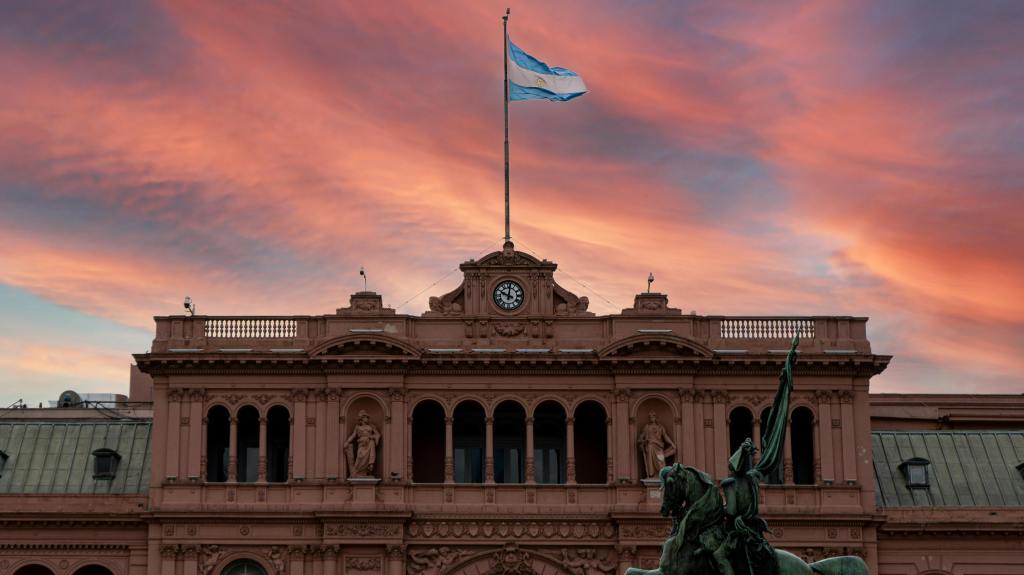
- Image: Pexels (Matheus De Moraes Gugelmim)



 The Bear Street Journal.
Leave a comment